- calendar_today August 8, 2025
As 2025 approaches, real estate trends in Quebec are beginning to shift in contrasting directions across major cities. While Montreal, the economic and cultural heart of the province, is expected to maintain modest price growth, some analysts predict a softening in appreciation rates due to affordability ceilings reached during the pandemic-era boom. Buyers are approaching a saturation point, especially first-time homeowners who remain priced out of central neighborhoods like Plateau-Mont-Royal and Griffintown.
On the other hand, Quebec City—a market long viewed as more stable and affordable—is seeing a surge in buyer interest. With lower average home prices compared to Montreal, Quebec City is drawing attention from remote workers, retirees, and even investors who view it as an underappreciated market. The city’s diversified economy, including government and tech sectors, is bolstering real estate confidence heading into 2025.
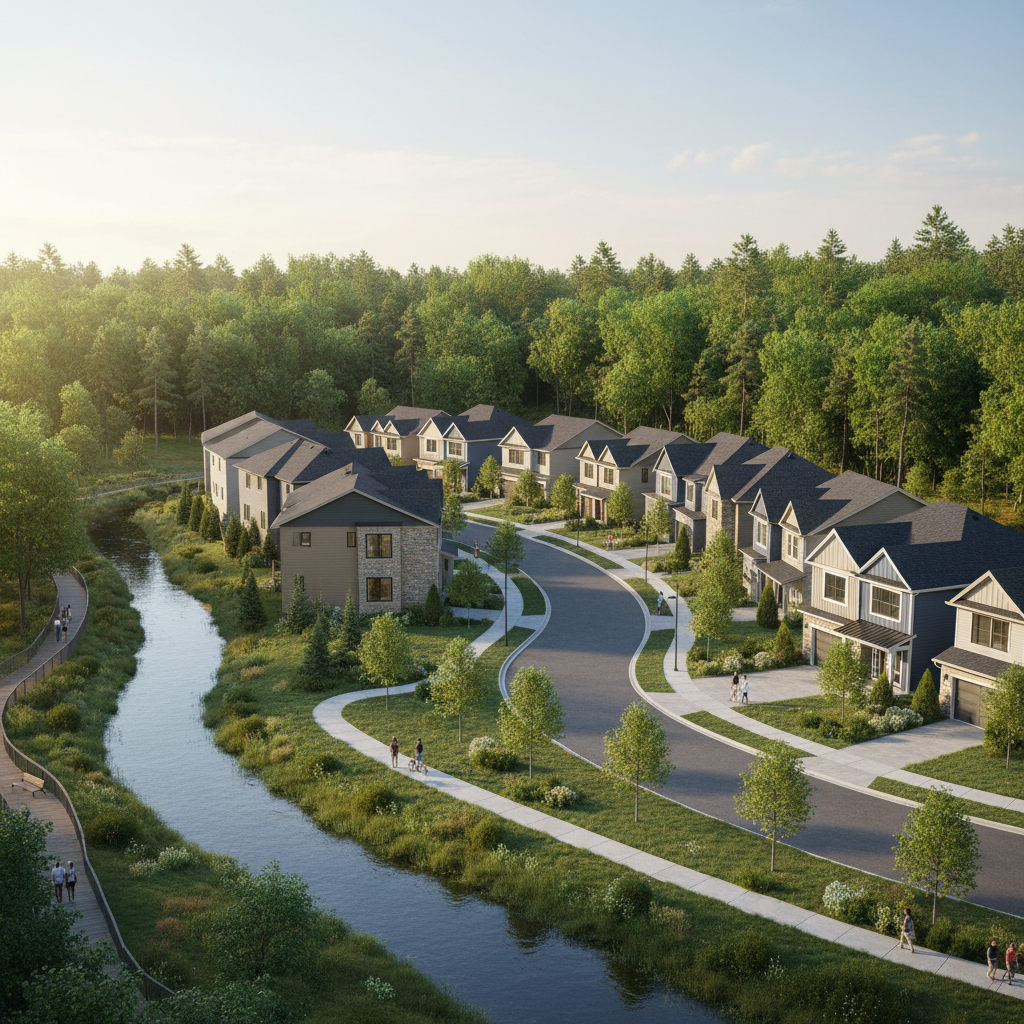
One of the most lasting post-pandemic shifts in Quebec’s housing market is the rise of remote and hybrid work arrangements. This trend continues to drive population movement out of high-density city centers toward suburban and semi-rural areas where space, nature, and relative affordability meet modern comfort.
Communities like Saint-Sauveur, Granby, and even as far as Mont-Tremblant are benefiting from an influx of residents seeking lifestyle upgrades. The Laurentians, in particular, are experiencing new development activity, including chalet-style properties marketed not just as vacation homes, but as full-time residences. This broadening of buyer interest is reconfiguring where demand clusters—and developers are watching closely.
Rental Market Pressures Are Intensifying in University Hubs
Quebec’s university towns—like Sherbrooke and Trois-Rivières—are seeing renewed demand in their rental sectors. Driven by international student return and tightened homeownership access, rental prices in these towns are projected to climb steadily through 2025. Landlords are responding with renovations and new build-to-rent properties aimed at young professionals and postgraduates.
Montreal’s rental market, too, is grappling with a tightening inventory. The city’s 2024 vacancy rate dipped below 2%—a signal that 2025 may see further upward pressure on rents, especially in desirable boroughs near McGill, Concordia, and UQAM. With short-term rentals increasingly restricted by regulation, the long-term rental stock is now under pressure to meet demand.
Immigration and Interprovincial Migration Fuel Fresh Market Energy
Quebec continues to benefit from strong immigration numbers, and many newcomers are choosing to settle in urban or semi-urban areas offering job security, public services, and community integration. The federal government’s multi-year immigration plan includes ambitious targets for 2025, and Quebec—due to its distinct selection powers—retains flexibility in attracting candidates that match its labor market needs.
Simultaneously, interprovincial migration is giving rise to new buyer profiles. Professionals relocating from Ontario to Quebec, especially to Gatineau or West Island, often cite cost savings and bilingual opportunities as motivating factors. These dynamics are injecting fresh energy into the housing ecosystem and expanding market diversity.
Interest Rates Are Stabilizing, But Affordability Remains Tight
While Bank of Canada rate hikes appear to have plateaued, the lingering effect of high borrowing costs is still reverberating across Quebec’s real estate scene. Mortgage qualification remains a barrier for many, despite modest income growth in key sectors like healthcare, tech, and education.
However, 2025 is likely to mark the beginning of a gradual interest rate rollback. This anticipated easing may open the gates for sidelined buyers—particularly those with stable employment but limited down payment capacity. Some Quebec developers are already offering incentives like rate buydowns or extended deposit timelines to attract these cautious consumers.
Green Building and Energy Efficiency Are Becoming Seller Differentiators
Environmental concerns are more than just policy points in Quebec—they’re increasingly influencing buyer behavior. In 2025, homes featuring heat pumps, superior insulation, solar readiness, or LEED certifications are commanding stronger resale value.
Government rebates and new construction standards are nudging builders and sellers alike toward energy-efficient upgrades. For homeowners in older Montreal boroughs or rural properties using oil heating, these upgrades are no longer optional—they’re essential for market competitiveness.
Investor Activity Is Shifting to Multi-Use and Affordable Housing
Institutional and private investors are pivoting toward properties that offer mixed-use potential or high rental yield. With commercial real estate undergoing a rebalancing period, there’s growing interest in converting underutilized properties—like empty office floors or motels—into multifamily housing or co-living spaces.
The Quebec government’s commitment to affordable housing development is also attracting impact-driven investors. Through partnerships with municipalities, several pilot projects in Rimouski and Val-d’Or are exploring modular construction, cooperative models, and land trust frameworks. These may not dominate the 2025 headlines, but they signal a growing appetite for innovative housing solutions beyond the traditional condo model.