- calendar_today August 13, 2025
In 2025, Quebec’s commercial real estate (CRE) market is emerging from a transitional phase marked by economic adjustments, tenant repositioning, and the restructuring of urban workspaces. As one of Canada’s most economically diverse provinces—with strongholds in aerospace, life sciences, AI, logistics, and culture—Quebec is now witnessing a new phase of strategic investment, repurposing, and regional expansion across its major and secondary markets.
From downtown Montreal’s post-pandemic reinvention to industrial developments along the St. Lawrence River, Quebec’s CRE outlook in 2025 is cautiously optimistic, guided by economic stability and municipal incentives aimed at long-term transformation.
Economic and Demographic Fundamentals Offer Stability
Quebec’s economy remains solid entering the second half of 2025. Unemployment hovers around 5.1%, GDP is projected to grow by 1.7% this year, and inflation has cooled to 2.1%. Immigration continues to support workforce growth, especially in Montreal and Laval, while international students and tech talent are reinforcing demand for mixed-use urban environments.
The Bank of Canada’s steady interest rate stance (currently at 4.25%) has created a more predictable lending environment, allowing developers and institutional investors to proceed with tempered confidence. The province’s proactive approach to public infrastructure—particularly in transportation, sustainability, and education—has further bolstered demand for commercial assets tied to high-density urban planning.
Montreal Office Market: Consolidation and Flight to Quality
Montreal’s office sector, historically driven by finance, tech, media, and government tenants, is undergoing significant restructuring. The city’s office vacancy rate is approximately 17.3% in mid-2025, according to CBRE, with a clear bifurcation emerging between aging, underperforming buildings and premium Class A towers offering modern, sustainable spaces.
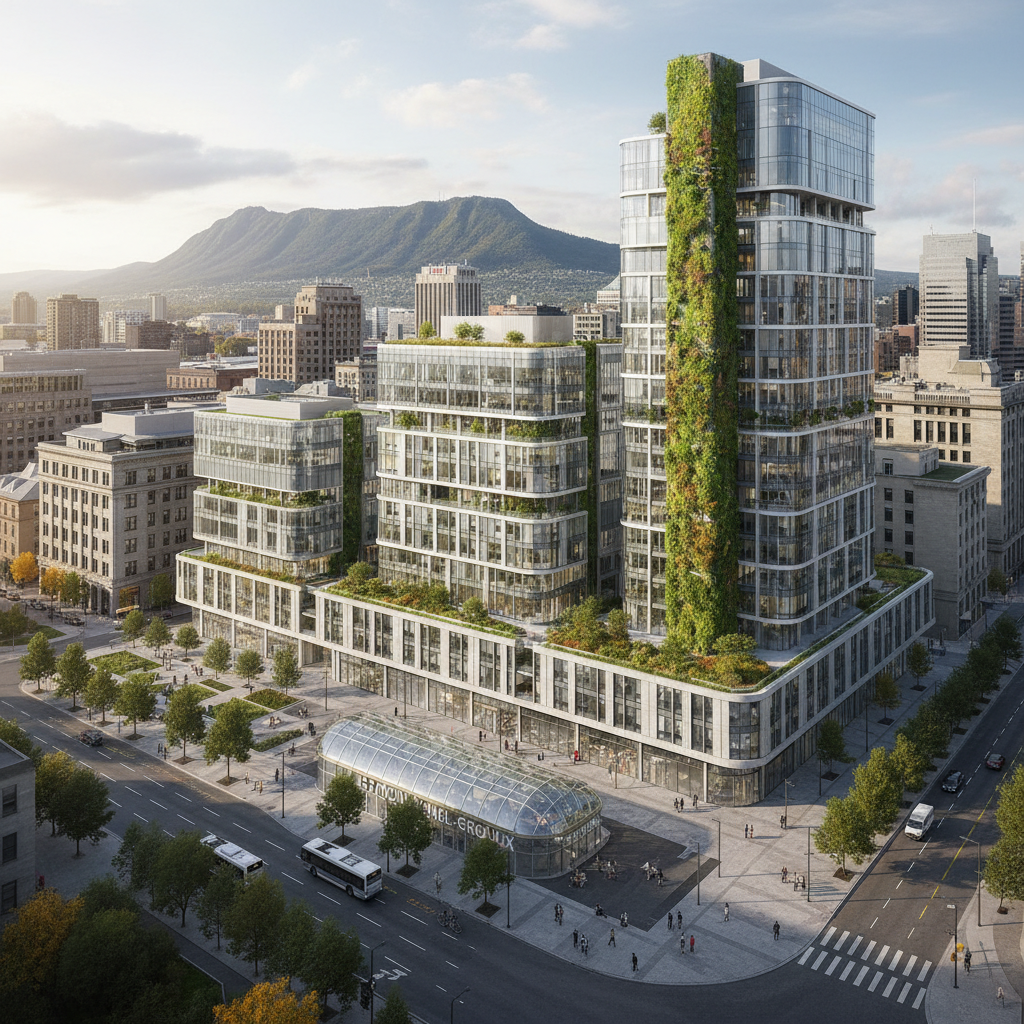
Firms are consolidating leases into smaller, better-located offices that support hybrid workforces. Notably, downtown buildings with WELL and BOMA BEST certifications are outperforming the market, especially those near REM (Réseau express métropolitain) transit stations.
Several landlords are launching repositioning efforts—including ESG upgrades and amenities geared toward employee wellness. Meanwhile, B and C-class office spaces in older corridors like Saint-Laurent and Parc-Extension are being eyed for residential or institutional conversion, as Quebec’s government promotes densification and infill development.
Industrial Sector: Logistics and Cold Storage Lead Demand
Quebec’s industrial real estate continues to be a bright spot in 2025. With vacancy rates under 2.5% in greater Montreal and even lower in Laval and Brossard, supply remains tight. Industrial lease rates are still climbing, driven by robust demand in e-commerce logistics, cold storage, light manufacturing, and distribution linked to North American supply chains.
The Port of Montreal and access to major highways (A-20, A-40, and A-30) give the region a strategic advantage. Investment activity has surged in logistics corridors along Longueuil, Vaudreuil, and Mirabel, where developers are delivering new warehousing inventory near transportation nodes.
Cross-border trade continues to boost the province’s relevance, with some industrial developers beginning to explore AI-enabled smart warehouses and ESG-compliant logistics centers to attract institutional tenants.
Retail Market Adjusts with Focus on Localism and Mixed Use
Retail real estate in Quebec has stabilized post-COVID, with adaptive reuse and experiential formats taking precedence. Large enclosed malls are either being redeveloped into mixed-use districts or focusing on service-based anchor tenants—clinics, co-working, and fitness facilities.
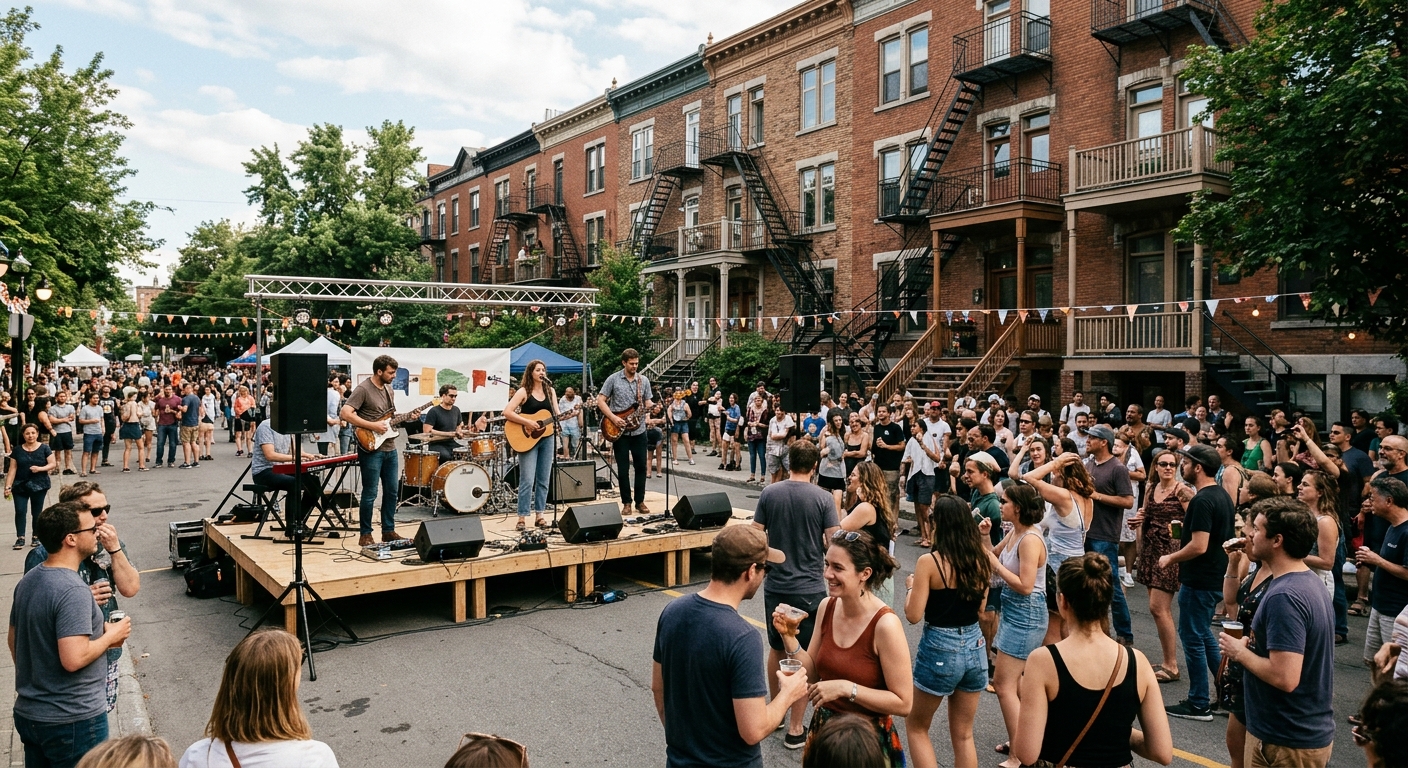
Montreal’s retail corridors—such as Sainte-Catherine Street and Plateau Mont-Royal—are seeing a resurgence of interest from boutique retailers and foodservice brands capitalizing on the city’s vibrant pedestrian culture. Neighborhood retail in Quebec City and Sherbrooke is also benefiting from demographic shifts and a rise in local, artisanal, and culturally rooted offerings.
Retail developers are increasingly working in tandem with housing providers to create integrated commercial-residential hubs, particularly in transit-served or university-adjacent areas.
Multifamily and Mixed-Use Drive CRE Urban Strategy
Quebec’s municipalities, especially Montreal and Quebec City, are fast-tracking development approvals for mixed-use and multifamily projects. With housing affordability under pressure and commercial vacancies rising in select office corridors, the push to rezone underutilized commercial space is accelerating.
Projects along the REM line, in Griffintown, and in suburban hubs like Laval and Brossard are integrating retail, coworking, and green space with mid- to high-rise residential. These developments are in high demand among younger renters, families, and downsizers seeking walkable, amenity-rich environments.
Government incentives for affordable housing integration and green design are encouraging more developers to pursue multi-use formats in dense, transit-friendly areas.
Investment Activity Returns, Focuses on Future-Proof Assets
After a muted 2023–2024, commercial investment in Quebec is regaining momentum. Transaction volume is expected to exceed CAD 11 billion in 2025, according to Colliers Canada, led by activity in industrial, multifamily, and medical office assets.
Institutional investors are increasingly drawn to ESG-rated properties, particularly those near transit corridors and urban renewal zones. Foreign capital—primarily from the U.S. and Europe—is returning to Montreal’s CRE scene, with a focus on urban infill, industrial hubs, and specialized properties like data centers and life sciences campuses.
The provincial pension fund, Caisse de dépôt et placement du Québec (CDPQ), continues to play a catalytic role, not only in real estate financing but also through its investment in REM and related urban infrastructure.
Secondary Markets Gain Ground
Outside Montreal and Quebec City, other urban centers such as Trois-Rivières, Gatineau, and Sherbrooke are capturing developer attention. These cities offer lower land and construction costs, university-driven populations, and government investment in digital infrastructure.
Gatineau, in particular, benefits from its proximity to Ottawa, with growing demand for professional office and flex-space developments. Sherbrooke is seeing an uptick in medical-commercial mixed-use builds tied to its research hospitals and health care cluster.
ESG Compliance Reshapes CRE Decision-Making
Environmental and social impact metrics are playing a larger role in Quebec’s CRE strategy. Tenants now demand energy-efficient spaces, carbon reduction plans, and biodiversity features like green roofs or community gardens.
The provincial government’s 2030 climate plan is nudging developers toward electrification of buildings, solar integration, and low-carbon construction materials. Institutional tenants—particularly universities and government agencies—are making LEED and WELL compliance a prerequisite in lease negotiations.
Challenges Ahead: Construction Costs and Permitting Bottlenecks
Despite positive momentum, several headwinds remain. Construction costs—especially for labor and energy-intensive materials—remain elevated. Permitting and zoning reforms, while underway, continue to create delays in urban centers.
Montreal’s aging infrastructure and complex bilingual regulatory framework also present unique hurdles for new entrants to the market. Developers are increasingly engaging local partners and lobbying for streamlined municipal processes to move projects forward efficiently.
Outlook: Quebec’s CRE Sector Embraces Urban Reconfiguration
In 2025, Quebec’s commercial real estate market is not simply bouncing back—it’s adapting. With a redefined sense of urban purpose, focus on ESG alignment, and regional rebalancing toward secondary markets, Quebec’s CRE future is being built on flexibility, density, and innovation.
As cities like Montreal, Quebec City, and Laval reposition their commercial cores, and industrial corridors draw global capital, the province is carving out a distinct, sustainable path forward in Canada’s broader commercial real estate narrative.