
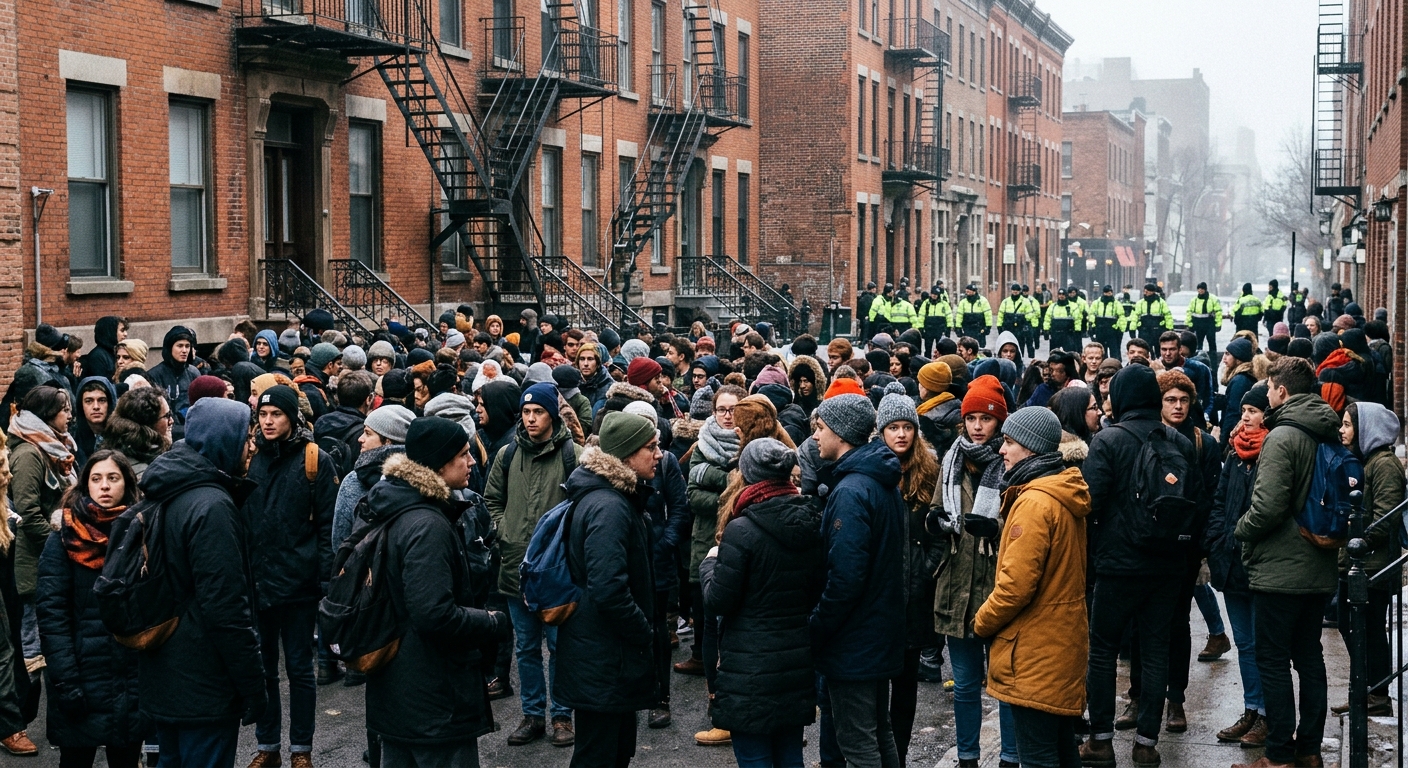
AI-generated illustration; not a photograph of the reported event.
- calendar_today November 17, 2026
Police Violence at Montreal Student Protest Draws Scrutiny
On November 13, thousands of students took to the streets of Montreal to protest austerity measures and mounting financial insecurity. The demonstration, which called attention to the challenges many Quebecers face in securing affordable housing and accessing quality public services, was met by a forceful police response. According to multiple reports, the Montreal police used tear gas and pepper spray, resulting in cases of police brutality against demonstrators and journalists, including individuals who were attempting to leave the protest area.
Context of Quebec’s Ongoing Austerity Measures
These recent events unfolded as the Quebec government continues to enforce austerity policies, further straining those already struggling to make ends meet. The ongoing Quebec housing crisis, with rising rent and inadequate access to affordable housing, has placed significant pressure on students and low-income residents alike. Reports indicate that more than 2,100 Quebec households currently lack stable housing—a growing concern throughout the province.
Challenges in Healthcare and Education Funding
In addition to the housing crisis, Quebec’s public services have drawn criticism for deteriorating standards—particularly in healthcare and education. The continued implementation of austerity measures has resulted in reduced funding and increased challenges for those attempting to access these essential services. Many citizens and student groups argue that the government’s focus on budgetary restraint is having a direct negative impact on their quality of life and future prospects.
Political Response and Government Approval
The provincial government, led by the Parti Québécois under Premier Paul St-Pierre Plamondon (PSPP), faces mounting criticism for its handling of these issues. The approval rating for PSPP's government now sits at a low 24%, reflecting widespread dissatisfaction. Critics claim that the administration is more interested in nationalist posturing and political maneuvering than addressing the pressing needs of its citizens. Premier St-Pierre Plamondon's now-notorious "ultragauche" comment to French President Emmanuel Macron has also been cited as evidence of a dismissive attitude toward protestors and the issues they raise.
Calls for Action Across Key Social Sectors
Advocates stress that Quebec cannot meaningfully move forward without addressing the core challenges of affordable housing, accessible healthcare, and adequate education funding. Many Quebecers feel they should not have to face aggressive police responses and street-level conflict to draw attention to these basic requirements. As the public conversation continues, protest groups and concerned citizens are urging provincial leaders to prioritize social investment over showmanship and austerity.
Conclusion
The events of November 13 and the subsequent public discourse have made it clear that issues of police brutality in Montreal expose deeper, systemic problems in Quebec. The demand for effective solutions to the province’s housing, healthcare, and education crises continues to grow, despite government attempts to redirect attention elsewhere.
Related coverage
Source: cultmtl.com.