- calendar_today August 5, 2025
Quebec’s real estate market outpaced national trends in 2024, with aggregate home prices forecast to rise about 8.6% year‑over‑year by the end of the year, buoyed by declining mortgage rates and renewed buyer confidence. Notably, Quebec City led the province with price increases of approximately 17% in Q1 2025 alone, with median values of single-family homes rising nearly 17% and condominiums climbing 17.5% year-over-year. Meanwhile, luxury property sales in Quebec City saw a price drop of 7.2% through August 2024, even as demand and listings grew. Throughout the Greater Montreal Area, high-end transactions surged despite broader challenges, with luxury segment sales over CAD 1 million rising sharply, especially in Westmount and Ville‑Marie.
Luxury home prices in Montreal, Quebec City, and Gatineau are expected to hold steady or rise modestly in 2025. Royal LePage forecasts an overall increase of 7% province-wide and up to 11% in Quebec City by Q4 2025. High-end condominiums and estates in places like Westmount, Outremont, and Old Quebec are likely to see gains between 3% and 7%, particularly as buyers respond to improved mortgage conditions. As rate cuts continue, affluent domestic buyers are increasingly ready to move on well-priced, fully furnished turnkey listings.
International and Interprovincial Buyers Will Return Selectively
Although Canada’s foreign buyer restrictions remain in place, overseas and interprovincial investors continue to drive interest in luxury estates. High-net-worth Canadians in Alberta and Ontario are showing renewed interest in Quebec real estate. International buyers, especially from Western Europe and Asia, remain active in trophy assets by using corporate or joint-venture structures. Luxury listings in Quebec City’s historic core and Montreal’s signature districts remain appealing to this segment, offering long-term capital resilience.
Secondary Cities Like Quebec City, Sherbrooke, and Trois‑Rivières Will Outperform
As urban affordability pressures mount in Montreal, secondary urban centres are emerging as luxury focal points. Quebec City leads with forecasted price growth of 11% in late 2025, making it the top regional hotspot in Canada for premium demand. Sherbrooke, Trois‑Rivières, and parts of Gatineau are seeing aggregate price rises between 5% and 11% thanks to low supply and rising lifestyle migration. Luxury buyers drawn to heritage architecture and natural settings are increasingly acquiring high-end properties in these lesser-known regions.
Smart Home and Wellness Amenities Are Becoming Expectations
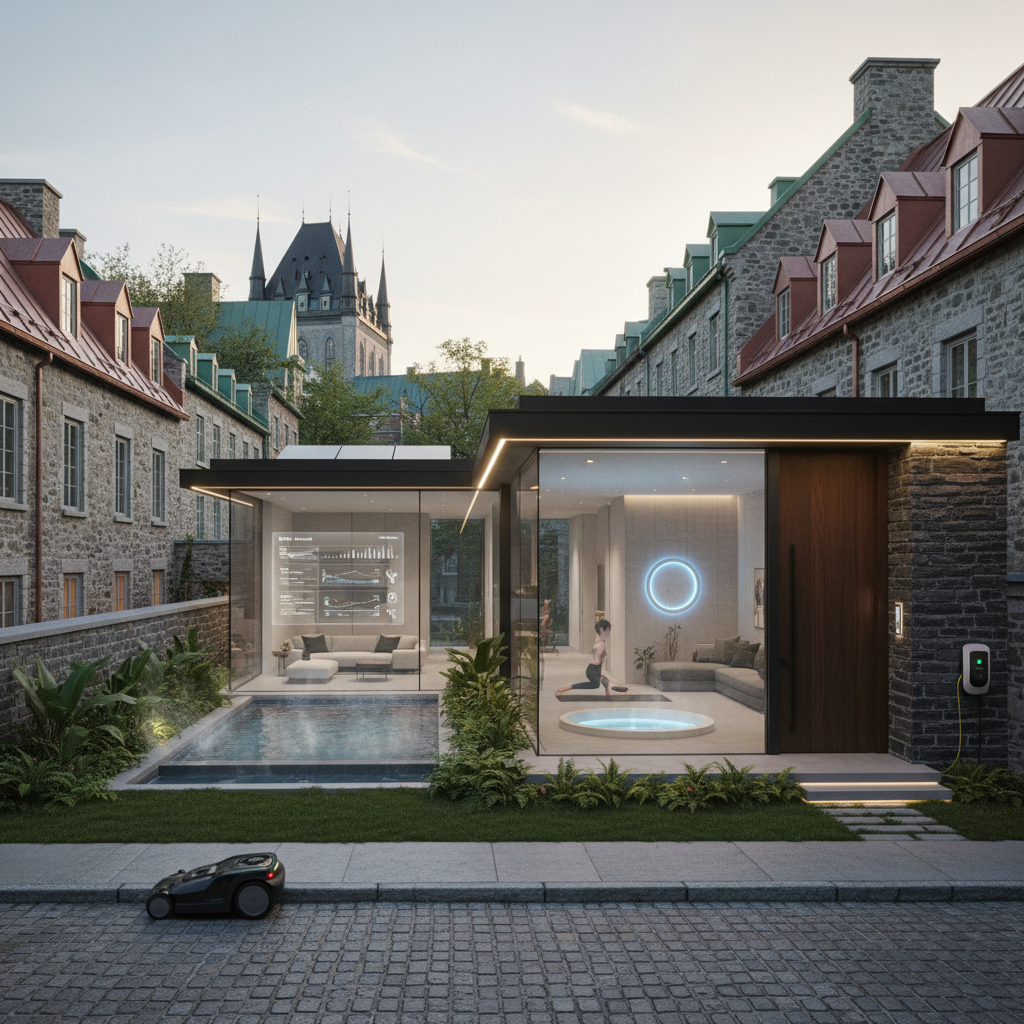
In 2025, luxury buyers across Quebec are prioritizing wellness and smart living integration. Properties in Montreal and Quebec’s secondary luxury markets now commonly include biometric access, full-spectrum filtration, spa-style bathrooms, meditation retreats, and whole-home automation for air, lighting, and security. Listing activity in these segments shows homeowners investing significantly in green infrastructure and comfort-based design to support higher valuations.
Inventory Remains Tight in Legacy Luxury Zones
Luxury inventory remains constrained in Quebec’s established neighbourhoods such as Westmount, Outremont, Mont-Royal, and Old Quebec. Limited new construction and growing demand have produced competition even amid broader affordability concerns. Despite rising overall listings, less than 5% of inventory in these enclaves qualifies as luxury, and off-market or private sales account for many of the high-end transactions.
High-End Rentals and Condo Ownership Options Will Expand
Luxury rentals and high-end condominiums are becoming more significant in Quebec’s upscale real estate mix. In Montreal, single-family home sales over CAD 1 million increased 11% in Q1 2025, but luxury condo sales also gained, with properties priced over CAD 4 million rising by 12%. In Quebec City, upscale short-term rentals and pied‑à‑terre units are emerging as affluent executives and vacationers query flexibility over ownership. This shift signals growing investor interest in luxury leasing as an asset class.
What Buyers, Sellers, and Developers Should Expect
In Quebec’s luxury sector in 2025, buyers should act quickly in competitive submarkets like Westmount and Quebec City core. Properties with smart features, wellness integration, and heritage value will retain value best. Sellers can benefit significantly by investing in modernization, green upgrades, or staging property for short-term rental appeal. Developers focused on limited-lot estates or high-end condo buildings in underserved secondary cities will find buyer appetite high. Real estate professionals skilled across primary and emerging luxury zones are in increasing demand.
Quebec’s Distinctive Luxury Real Estate Path in 2025
Quebec’s luxury housing market in 2025 is characterized by consistency, emerging regional strength, and refined expectations. While price growth may be modest, demand remains firm across established and growing luxury zones. Luxury in Quebec is now defined by heritage, tech integration, wellness, and selective urban expansion—not speculative bubble behavior. This provincial focus on quality over quantity positions Quebec as a model for sustainable luxury in a challenging national housing environment.