
- calendar_today August 6, 2025
Once a booming engine for Canadian housing demand, Quebec’s real estate market is settling into a more measured rhythm in 2025. Price growth has moderated, and policy shifts—from mortgage rules to rental reforms—are reshaping both investor behavior and buyer sentiment. Amid these changes, agents across Montreal, Quebec City, and Gatineau are navigating a market defined by tighter margins, demographic shifts, and evolving regional differences.
Montréal’s Resilience Tested Amid Slowdown
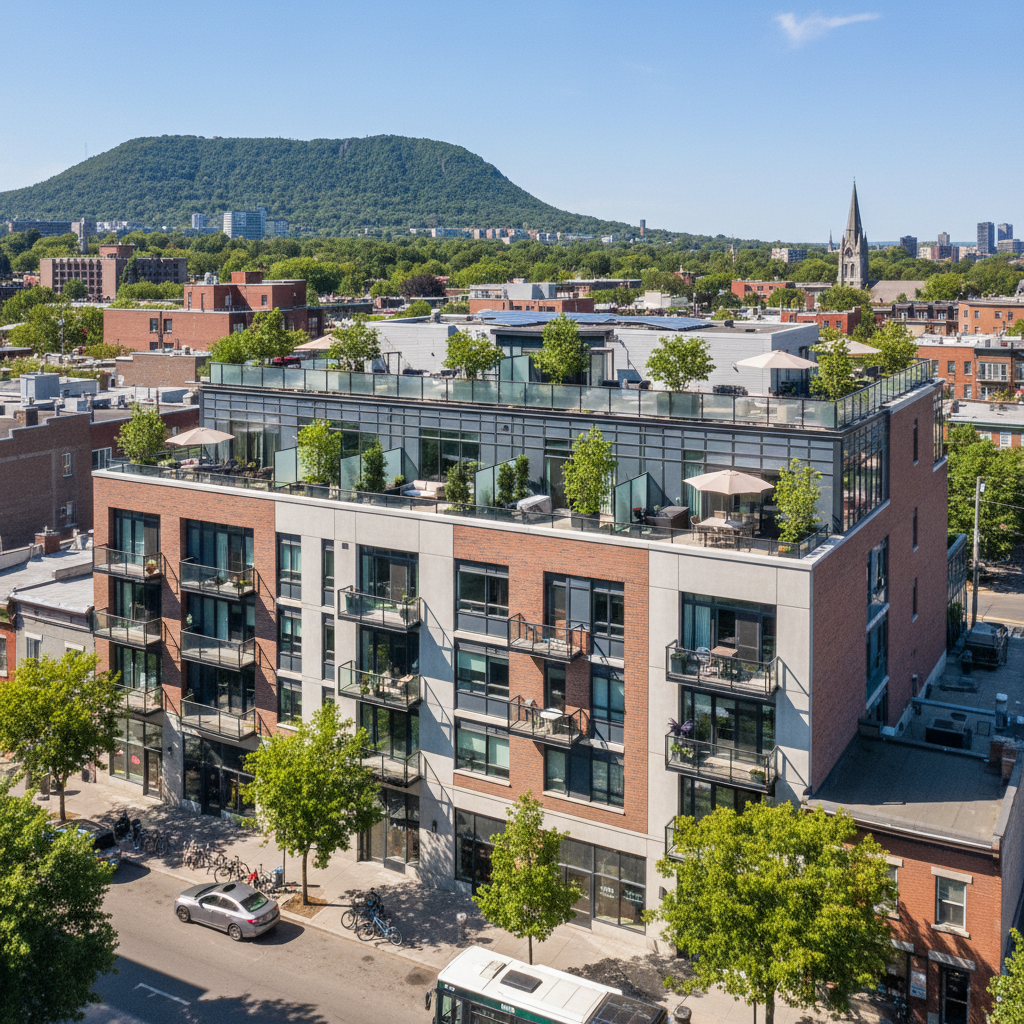
Montreal’s urban core—home to lofty condo towers and rooftop patios—is grappling with slower sales and raised mortgage rates. Average time on market has increased by nearly 20%, and condo prices in Plateau Mont-Royal and Griffintown have flattened.
“Buyer hesitancy is real: affordability pressures in Quebec City are spilling into Montreal as Maple Ridge candidate gains traction,” says local agent Pierre Tremblay. Many new residents, once drawn by the city’s affordability compared to Toronto, are now opting for suburbs like Laval or Longueuil, compressing demand downtown.
Affordability Pressures Spread Across Urban and Suburban Zones
Cities like Québec City and Gatineau are witnessing a rising affordability gap. While urban price growth has slowed to below 3% year-over-year, suburban and smaller markets are seeing stronger momentum. Cities such as Sherbrooke and Trois-Rivières are drawing first-time buyers priced out of Montreal.
Agents in these regions report interest from younger demographics and parents seeking lower-priced homes near universities or commuter rail networks. At the same time, longer mortgage amortizations and tighter lending conditions are forcing buyers to reassess budgets—eroding demand particularly at the mid-price tier.
Rental Reform Brings Uncertainty to Investor Flows
A sweeping tenant protection act passed earlier this year has raised rental eviction thresholds and capped annual rent increases across Québec. While intended to protect tenants, the legislation has raised concerns among some investors considering new rental developments in Montréal’s Rosemont/Petite-Patrie and Quebec City’s Saint-Roch district.
“Landlords are reassessing risk,” notes Marion Bouchard, a rental housing advisor in Gatineau. “Some institutional firms are pausing acquisitions until the rules stabilize.”
Market Imbalance Eases, but Inventory Constraints Remain
Quebec’s market is no longer overheated, but supply remains tight. Listings in Montreal and Quebec City hover below the five‑week threshold—well under the balanced market benchmark of sixteen weeks. Pricing power has softened, but sellers still hold some leverage.
In Laval and Longueuil, new developments continue to fill pipelines—especially in transit-adjacent corridors. Yet pricing remains firm despite slower sales, particularly for family-sized homes in Edifice archival zones.
Residential Investment Adapts to New Norms
Large-scale institutional activity has cooled, but rental and multifamily properties remain active in emerging sectors like Trois-Rivières and Sherbrooke. Investors are favoring smaller, stabilized assets over speculative condo projects.
“In the current regulatory climate, multifamily deals seem safer than single-unit flips,” says real estate economist François Gagnon at Montréal’s Laval University. “Smaller cities offer higher yields and fewer policy headwinds.”
Urban Redevelopment Moves Ahead—Selectively
Quebec City and Montreal are pressing ahead with redevelopment plans—but focused on mixed-use neighborhoods. In Montréal, a former commercial block in Griffintown is being reimagined as an art-themed residential complex. In Quebec City’s Saint-Jean-Baptiste, aging heritage stock is being retrofitted into co-living or senior housing.
These modest but targeted projects reflect a shift: instead of large-scale condominium towers, Quebec’s urban strategy now emphasizes adaptable mid-rise development—more aligned with demographic demand and transit access.
Policy Impact & Regional Disparity
Municipal and provincial governments are adjusting zoning, density, and rental regulations to reflect market shifts. Quebec City’s new housing subsidy program aims to support families in older neighborhoods, while Montreal continues to streamline permits for transit-adjacent, energy-efficient construction.
Still, some agents caution that policy lag persists in suburban counties like Laurentides or Montérégie, where rezoning applications for infill projects remain slow.
Outlook: Pitfalls and Opportunities Ahead
Quebec’s housing market in 2025 is evolving—not retreating. Slower sales and regulatory reforms are real, but so too is the resilience built on affordability, regional diversity, and smaller‑market adaptability.
Experts say agents and investors should navigate carefully: downtown listings may take longer to sell, rental investments require new calculations, and suburban or secondary cities may yield better margins. Market watchers expect 2026 to bring clearer policy frameworks, modest rebound in selected regions, and continued migration to mid-sized urban centers across Quebec.