
- calendar_today August 20, 2025
.
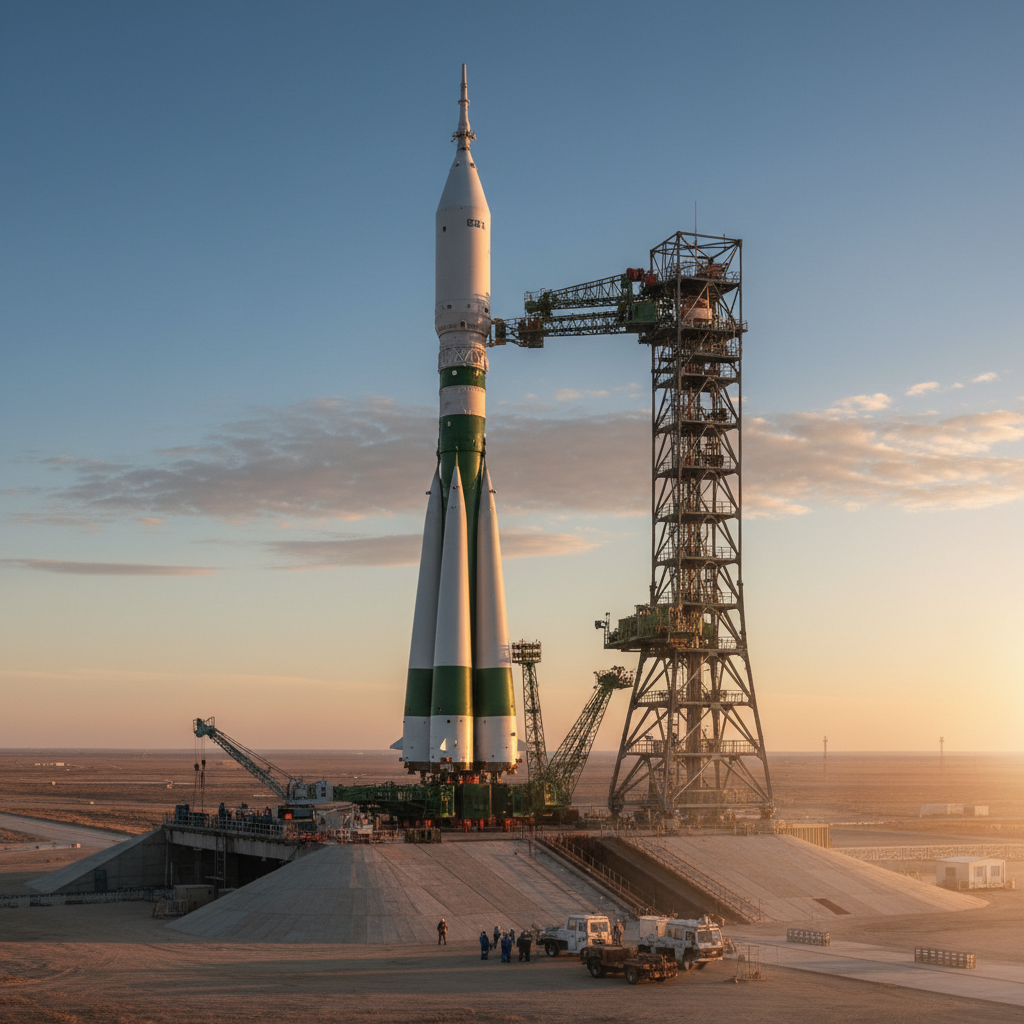
Russia is on the verge of flying its latest rocket. The Soyuz-5 booster is scheduled to lift off before the end of this year, Roscosmos boss Dmitry Bakanov said in an interview with state news agency TASS.
“Yes, we are planning for December,” Bakanov said. All the preparations for the maiden flight are nearly complete, he added. The Soyuz-5 will blast off from the Baikonur cosmodrome in Kazakhstan. If the countdown goes smoothly, it will mark the first test flight of a vehicle in development for more than ten years. Roscosmos plans several test launches, but the vehicle will not enter operational service until at least 2028.
A Borrowed Design
The Soyuz-5, also known as Irtysh, is by no means a totally new design. In fact, its origins can be traced back to the Zenit-2 rocket, first developed in the 1980s by Ukraine’s Yuzhnoye Design Bureau. Built in Ukraine, Zenit rockets used Russian RD-171 engines, making them one of the few space projects that enjoyed sustained cooperation between Moscow and Kyiv after the fall of the Soviet Union. That was then. After Russia invaded Ukraine in 2022, the partnership came to an end. In late 2023, Russia even bombed the same Ukrainian plant where Zenit rockets had once been assembled.
Essentially, Soyuz-5 is a bigger, homegrown version of Zenit. The redesign removes all Ukrainian influence, with all critical components built in Russia. For Moscow, that is a strategic win. It ends years of dependence and, at the same time, says goodbye to the long-serving Proton-M launcher.
A Bridge to the Future
In terms of capability, Soyuz-5 is a medium-lift vehicle. It can haul about 17 metric tons to low-Earth orbit. The booster packs a bit more punch than Zenit thanks to marginally larger propellant tanks. The RD-171MV engine that powers the booster is the latest version of a family of engines with a long history.
The design goes back to the Energia program of the 1980s, which gave the Soviet Union its own space shuttle called Buran. The shuttles flew only a few missions, and the program was canceled soon after the Soviet collapse. The latest RD-171MV has one thing in common with its predecessors: the complete lack of Ukrainian parts. Like the older Zenit-2, the new engine runs on kerosene and liquid oxygen. But RD-171MV is far more powerful than its predecessors, generating more than three times the thrust of the Space Shuttle main engine. The RD-171MV is currently the most powerful operational liquid-fueled rocket engine.
Soyuz-5, however, is an expendable rocket, in contrast to newer competitors. Most prominently, SpaceX’s Falcon 9 is designed from the start to be reusable. That difference also puts the military service’s international launch business in doubt. Soyuz-5 may well struggle to win a meaningful share of that market.
Still, Soyuz-5 has a role as an intermediate vehicle. With limited funding for space activities, squeezed by war spending and international sanctions, bringing a brand-new reusable rocket to market has been difficult. The Amur, or Soyuz-7, project was intended to fill that gap. It features a reusable first stage and methane-fueled engines. In theory, a vehicle like that could eventually challenge SpaceX’s price tags. But the design keeps being delayed, and its first flight will not come before 2030 at the earliest.
In the meantime, Soyuz-5 is an important step forward for Roscosmos. For better or worse, the booster allows Russia to keep moving ahead, even if it does so on technology that is stuck in the Soviet past.
The commercial picture, however, is far less rosy. The international launch industry has changed dramatically since the Soyuz-5 project began. SpaceX and, to a lesser extent, Chinese launch providers offer far cheaper and more flexible launch options. Russia still flies its Soyuz-2 rockets for crewed missions and the Angara family for larger payloads, but neither has managed to win significant international business. Soyuz-5 may well repeat that pattern.
Nonetheless, the fact that Roscosmos has managed to get Soyuz-5 close to launch at all is a triumph of sorts. A successful flight this December would prove Russia can still put new hardware on the pad despite international sanctions and a declining space budget.
Soyuz-5 is not likely to change the way rockets are designed. But for Russia, it is a step toward technological independence. It is a bridge between a difficult present and an uncertain future, whether that future is dominated by Amur or a new generation of rockets still on the drawing board.